The University of the Republic of Indonesia Teachers Association Semarang (UPGRIS) is committed to delivering high-quality education aligned with national priorities, global standards, and sustainable development principles. The university’s education and academic goals are formally established and implemented through its strategic and policy framework and policies written in the form of documents : University Statutes, UPGRIS Strategic Plan, and University Academic Policy.
These frameworks ensure that all academic activities are systematically directed toward institutional excellence, graduate competitiveness, and societal impact.
These frameworks ensure that all academic activities are systematically directed toward institutional excellence, graduate competitiveness, and societal impact.
Educational and Academic Goals
Educational and Academic Objectives of Universitas Persatuan Guru Republik Indonesia Semarang are described as follows :
1. Producing Competent and Character-Driven Graduates
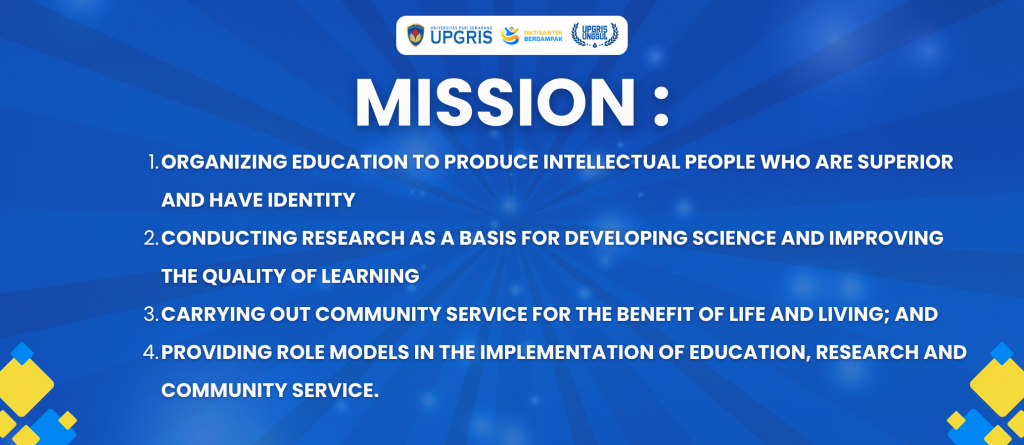
UPGRIS develops graduates who are academically excellent, professionally competent, and possess strong ethical values, national character, and global awareness, as stated in the UPGRIS vision and mission :
The university implements research-based learning and Outcome-Based Education (OBE) to ensure alignment with scientific advancement and labor market needs. This is supported by Academic Policy (SPMI), Standar Tambahan SPMI 2023, Study Program Curriculum Documents.
No
OBE
Document
1
Academic Policy (SPMI)
2
Standar Tambahan SPMI 2023
3
Study Program Curriculum Documents
3. Advancing Sustainable Development and Environmental Responsibility
UPGRIS integrates sustainability principles, environmental awareness, and climate- related issues into teaching, research, and community engagement, as outlined in:
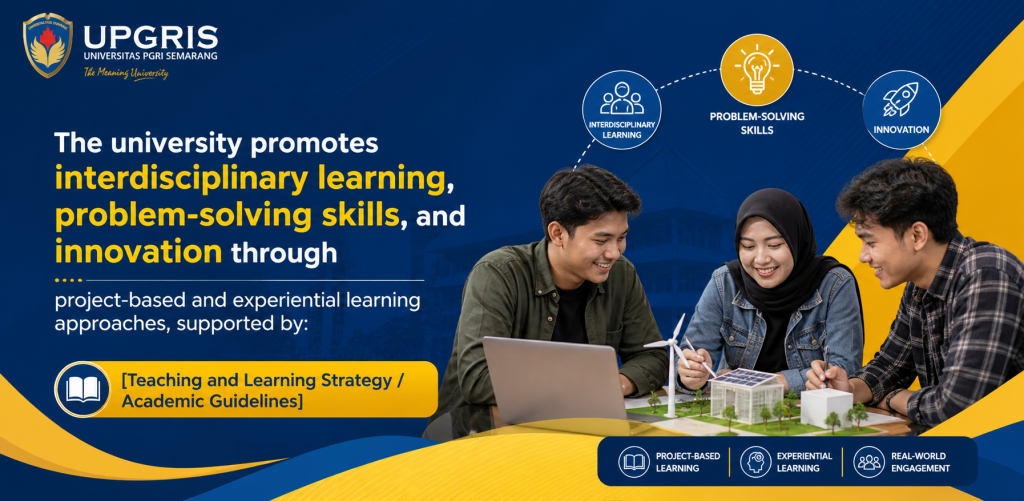
The university promotes interdisciplinary learning, strengthens problem-solving skills, and fosters innovation through project-based and experiential learning approaches. These approaches are designed to engage students in real-world challenges, encourage critical thinking, and develop collaborative competencies. The implementation is supported by comprehensive institutional frameworks, including the Teaching and Learning Strategy and Academic Guidelines, which ensure quality, relevance, and continuous improvement in the learning process.
5. Expanding Internationalization and Global Engagement
UPGRIS actively strengthens international collaboration, promotes academic mobility, and enhances global exposure to develop highly competitive graduates who are equipped with global competencies, cross-cultural understanding, and innovative capabilities.
6. Ensuring Inclusive and Lifelong Learning
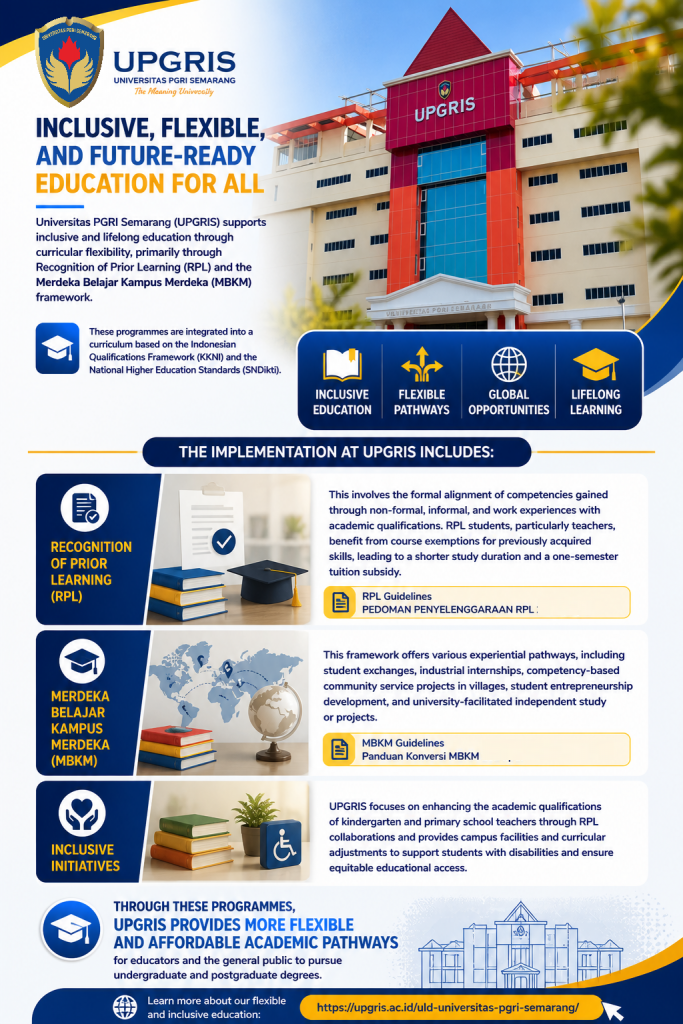
Universitas PGRI Semarang (UPGRIS) supports inclusive and lifelong education through curricular flexibility, primarily through Recognition of Prior Learning (RPL) and the Merdeka Belajar Kampus Merdeka(MBKM) framework. These programmes are integrated into a curriculum based on the Indonesian Qualifications Framework (KKNI) and the National Higher Education Standards (SNDikti).
The implementation at UPGRIS includes:
Recognition of Prior Learning (RPL): This involves the formal alignment of competencies gained through non-formal, informal, and work experiences with academic qualifications. RPL students, particularly teachers, benefit from course exemptions for previously acquired skills, leading to a shorter study duration and a one-semester tuition subsidy.
Merdeka Belajar Kampus Merdeka (MBKM): This framework offers various experiential pathways, including student exchanges, industrial internships, competency-based community service projects in villages, student entrepreneurship development, and university-facilitated independent study or projects.
Inclusive Initiatives: UPGRIS focuses on enhancing the academic qualifications of kindergarten and primary school teachers through RPL collaborations and provides campus facilities and curricular adjustments to support students with disabilities and ensure equitable educational access.
UPGRIS is committed to supporting the United Nations Sustainable Development Goals (SDGs), particularly: SDG 1 (No Poverty ), SDG 3 (Good Health and Well-being), SDG 4 (Quality Education), SDG 5 (Gender Equality ), SDG 9 (Industry, Innovation, and Infrastructure), SDG 13 (Climate Action). This commitment is embedded in academic policies on research activities and community engagement.
The university integrates climate change awareness, environmental sustainability, and responsible resource management into teaching and institutional practices. UPGRIS also promotes environmentally responsible behavior among students, academic staff, and employees as part of its sustainability agenda.
These commitments are aligned with :
Quick Links
No
Name
Document
1
RENSTRA Pengabdian 2020
2
Sertifikat SPAB SMA Lab UPGRIS
3
Buku Pedoman Magang Kependidikan 2026
4
UPGRIS Strategic Plan (Renstra 2025–2029)
5
Center for Environmental and Sustainability
6
RENSTRA Penelitian UPGRIS 2025–2029
The implementation of these educational goals is supported by the following official documents